
Canada Leads the Way in Quantum Computing Innovation with D-Wave Systems
Explore how Vancouver’s quantum hub is revolutionizing science and technology, powering advancements in finance, healthcare, and more

Canadian Achievements in Science and Technology Week - Day 2
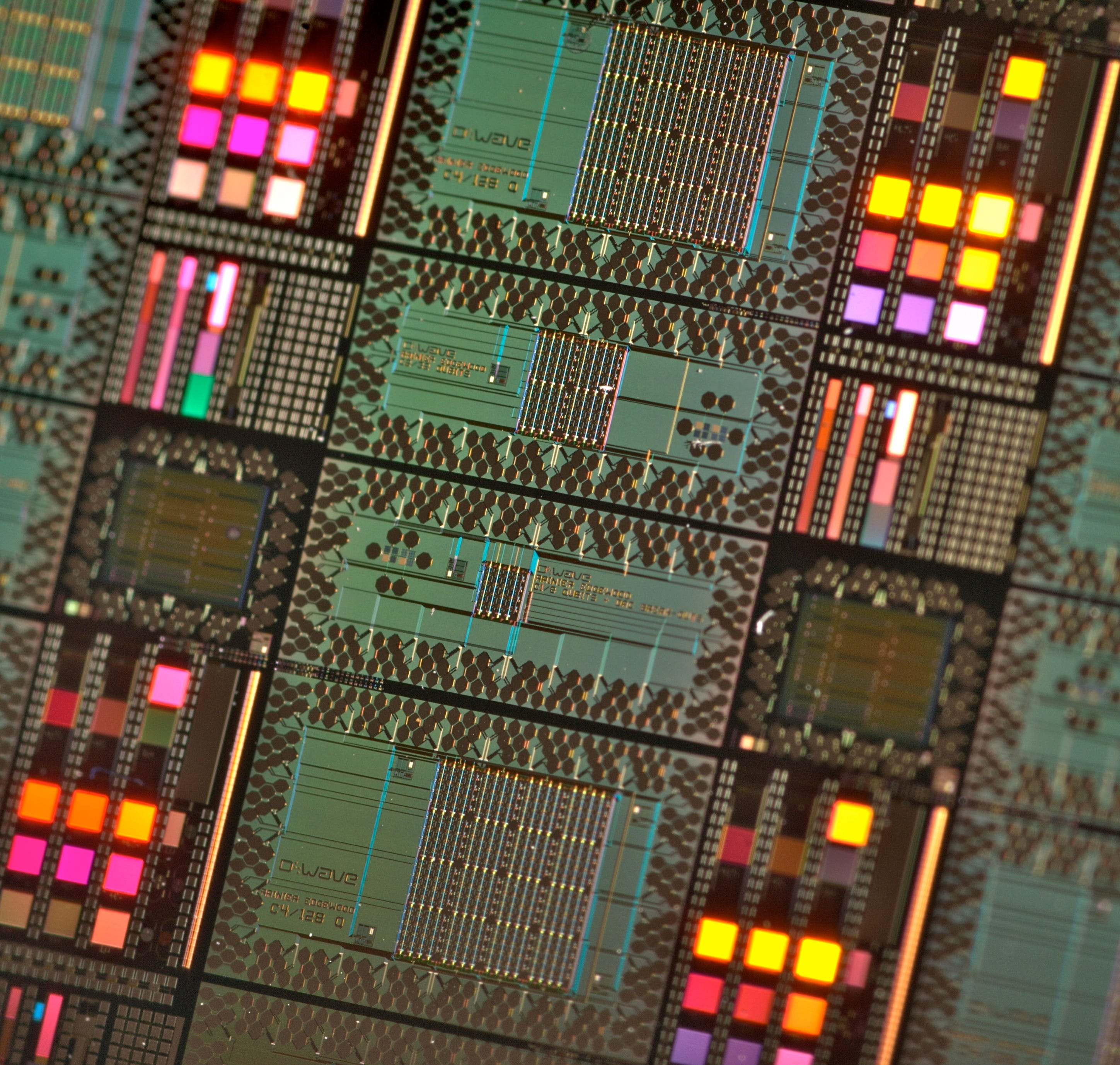
If you’ve ever looked across the water from Vancouver’s downtown, you might have noticed Burnaby’s high-tech campuses.
One of those buildings houses D-Wave Systems. Although it doesn’t look too different from other research labs, what’s happening inside is extraordinary. D-Wave Systems has built the world’s first commercial quantum computer, and they’re leading a wave of innovation that some people call “Vancouver’s Quantum Revolution.”
A New Kind of Computing
Most of the computers you use—laptops, phones, or even big data servers—rely on what’s called “classical computing.”
They store information in bits, which are either 0 or 1. Quantum computing, on the other hand, uses qubits. A qubit can be 0, 1, or a combination of both at the same time. This strange property, known as “superposition,” allows quantum computers to process huge amounts of data much faster than classical machines can.
Why Does This Matter?
Speed:
A quantum computer can test different solutions in parallel, rather than one at a time.
Complex Problems:
With thousands of qubits, quantum computers can handle challenges that would overwhelm regular supercomputers.
For you and me, this can lead to breakthroughs in areas like:
Drug Discovery:
Designing new medicines faster by simulating how molecules interact, without waiting for real-world lab tests.
Climate Modelling:
Studying weather patterns and climate shifts in greater detail, helping scientists predict changes more accurately.
Financial Systems:
Improving the way banks and investment firms pick stocks, assess risk, or detect fraud.
Canada’s Home for Quantum Computing
Burnaby is part of the Greater Vancouver area in British Columbia. You may think of Vancouver as a place known for rain, mountains, and film shoots. But over the past decade, it’s also become a leader in quantum computing research.
D-Wave is at the center of this growth. Here’s why Canada is so important in this field:
Government Support:
Canada has a National Quantum Strategy to fund quantum research.
This means teams at universities and private companies get money to explore new ideas.
Academic Connections:
The University of British Columbia, Simon Fraser University, and other schools have strong physics and engineering programs.
Their students often end up at companies like D-Wave.
Global Interest:
Major organizations around the world, including NASA and Google, have used D-Wave’s quantum machines for their research projects.
This puts Canada on the map for anyone interested in advanced computing.
The First Commercial Quantum Computer
What does it mean to have a “commercial” quantum computer?
Simply put, it’s a system that someone can actually buy or rent for practical use, rather than just a lab experiment. D-Wave took the leap years ago by offering cloud access to their machines, and some companies decided to purchase their own. Since then, they’ve continued to improve their hardware.
Advantage System:
One of D-Wave’s quantum machines with around 5,000 qubits.
It can handle certain optimization problems (like scheduling or route planning) better than many classical computers.
Hybrid Quantum Solver:
Introduced at their “Qubits” conference in 2024, this solver merges quantum and classical computing.
That way, you can tackle enormous tasks with up to 2 million variables, which is useful for things like logistics, factory planning, and even creating advanced machine learning models.
Real-World Impact
If you’re wondering if this is all just hype?
It’s not. Quantum computing has found a home in some surprising places:
Drug Companies:
By using D-Wave’s systems, they can speed up how they search for new medicines.
Quantum simulations can look at countless molecular structures more efficiently.
Climate Labs:
Researchers trying to figure out climate patterns use quantum computing to test thousands of scenarios.
While classical supercomputers can do this, quantum computers might handle certain tasks more quickly.
Financial Firms:
Complex calculations like portfolio optimization—where a bank weighs risk and reward for huge groups of stocks—can be sped up with quantum methods.
You already know that D-Wave Systems in Burnaby has built the world’s first commercial quantum computer. But you might be curious about how they keep pushing the envelope. After all, technology never stands still.
Breaking New Ground with Quantum Annealing
D-Wave uses a method called “quantum annealing.” Most other quantum computers rely on a method known as “gate-based” computing.
Each approach has its pros and cons:
Quantum Annealing:
Good for optimization tasks (e.g., finding the best route for shipping packages).
Can handle many variables at once.
Has been quicker to reach high qubit counts, like thousands of qubits.
Gate-Based Quantum Computing:
Can run a wider range of complex algorithms, like factoring large numbers.
Usually smaller in qubit count for now, but better at certain tasks that need precise error correction.
D-Wave’s focus on quantum annealing means they can solve some tricky problems today, problems that might otherwise take classical supercomputers ages to figure out.
Although gate-based machines are more flexible, they’re still catching up in terms of practical, everyday applications.
Canada’s Largest Quantum Hub
Because of D-Wave, Vancouver has become a hotspot for quantum research.
But it’s not just about one company. This region hosts a growing network of startups, labs, and research centers:
UBC’s Quantum Matter Institute:
Here, scientists study how quantum physics can improve materials, from superconductors to new types of semiconductors.
Simon Fraser University:
Known for strong physics and computer science programs, SFU feeds fresh minds into quantum research.
Supportive Environment:
Both provincial and federal governments have offered grants, making it easier for quantum-based projects to get off the ground.
All these pieces come together to form what many call the “world’s largest quantum computing hub.”
Vancouver doesn’t hold back when it comes to ambition in this area, and every year more students, engineers, and entrepreneurs jump into the field.
How Quantum Computing Helps Canada
It’s exciting to think about the possibilities.
Quantum computing promises to change entire industries:
Drug Discovery
Finding new treatments often requires testing thousands of molecules.
Quantum computers can shorten the search by simulating molecular interactions faster.
This could lead to quicker breakthroughs for illnesses that still lack effective treatments.
Climate Modeling
Predicting changes in Earth’s climate involves lots of data points, from ocean temperatures to greenhouse gas measurements.
Quantum methods might let scientists run bigger and more detailed models.
Better predictions can guide policymakers, farmers, and energy companies in planning for the future.
Financial Systems
Big banks and investment firms want to optimize portfolios or discover hidden risks.
Quantum computers can sift through vast sets of market data and suggest strategies faster than classical models.
This could help in making more stable financial markets and safer investments.
A Look Ahead
As of 2024, D-Wave has introduced a new quantum processor called the Advantage2.
This system features thousands of qubits with improved connections between them, allowing even more complex problems to be tackled. They also offer cloud services so companies around the world can test out quantum computing without having to buy a physical machine.
In the near future, you might see quantum computers working alongside classical systems.
This “hybrid” approach means using each type of computer for what it does best. Picture a classical computer handling simple tasks, while a quantum processor tackles the tough parts.
Challenges to Overcome
No advanced technology comes without its share of hurdles:
Error Correction:
Quantum states are fragile.
Small vibrations or temperature changes can disrupt calculations.
Researchers are still improving methods to keep the system stable.
Cost:
Building and maintaining a quantum computer isn’t cheap.
Specialized equipment is needed, and operating temperatures can go as low as near absolute zero.
Security Concerns:
Quantum computers might crack certain encryption methods.
Experts are already working on “post-quantum” encryption to stay ahead of hackers.
Canada, however, seems well-positioned to address these challenges. Our history in physics, engineering, and high-performance computing means we have a homegrown talent pool to keep pushing forward.
Community and Collaboration
D-Wave isn’t doing this alone. Some of the big names that have used or partnered with D-Wave include NASA, Google, and Lockheed Martin.
These partnerships bring in both funding and real-world problems. For example, NASA has tried using quantum computing for scheduling telescope time and planning space missions. Google has tested how well D-Wave machines can handle certain optimization puzzles.
All of this collaboration places Canada squarely on the world stage for science and tech. When you see headlines about quantum breakthroughs, there’s a good chance a Canadian lab or company is part of the story.
Why This Story Matters to You
Quantum computing might sound like something far-off, but it can eventually touch everyday life—whether that means better medical treatments, more accurate weather forecasts, or safer online transactions.
Vancouver’s Quantum Revolution is an example of how a city, a country, and a group of dedicated researchers can change how we solve the toughest challenges.
If you ever make it to Burnaby, it might be worth taking a quick look at D-Wave’s campus. From the outside, it may seem like any other building. But inside, you’ll find a machine operating near absolute zero, tinkering with qubits, and exploring new boundaries of what’s possible.
Final Thoughts
As we celebrate Canadian achievements in science and technology this week, D-Wave’s success story reminds us that big dreams can thrive on the West Coast.
When government funding, academic research, and private enterprise align, we get breakthroughs that capture worldwide attention. Who knows? The next time you spot a headline about a new life-saving drug or a climate change solution, you might think about the role quantum computing played—and how a group of Canadians at D-Wave helped make it happen.
Your Turn
What do you think about when you hear the term “Canadian achievements in science and technology?” Were you aware that we were a leader in quantum computing? Did this story help you to understand what quantum computing is and why it is important? Take a sec. to type a comment and share your thoughts. I look forward to reading them all. I also respond to them all and appreciate the opportunity to have a conversation with you about the topics we cover each week.
And then, have a rad rest of your day!
Sources used to research this story
https://quantumzeitgeist.com/d-wave-ceo-gives-predictions-for-quantum-in-2024/
https://en.wikipedia.org/wiki/D-Wave_2X
https://quantumzeitgeist.com/quantum-computing-applications-in-2024/
https://thequantuminsider.com/2022/07/01/d-wave-quantum-computer/
https://capitalhillgroup.ca/canadas-national-quantum-strategy-unveiled/
https://quantumcomputingreport.com/the-canadian-quantum-ecosystem/
https://www.nature.com/articles/474018a
https://thewalrus.ca/breaking-d-wave/
https://www.facebook.com/story.php?story_fbid=238279382191600&id=100080286198896
https://news.gov.bc.ca/releases/2018EMPR0062-002372
https://thequantuminsider.com/2024/12/31/2025-expert-quantum-predictions-quantum-computing/
https://www.webopedia.com/technology/quantum-computing-companies/
https://www.qai.ca/2024-quantum-ecosystem-report
https://ised-isde.canada.ca/site/national-quantum-strategy/en/canadas-national-quantum-strategy
https://uwaterloo.ca/news/exploring-canadas-quantum-future
https://ised-isde.canada.ca/site/national-quantum-strategy/en
https://editverse.com/quantum-computing-implications-for-future-research-in-2024-2025/
https://newspaceeconomy.ca/2024/12/31/understanding-quantum-computing/
https://acquinox.capital/blog/quantum-computing-strategic-insights
https://epb.com/get-connected/gig-internet/top-applications-of-quantum-computing/
https://biforesight.com/quantum/quantum-computing-in-2025-risk-and-reward/
https://thequantuminsider.com/2023/01/05/state-of-canada-quantum-computing-2022/